
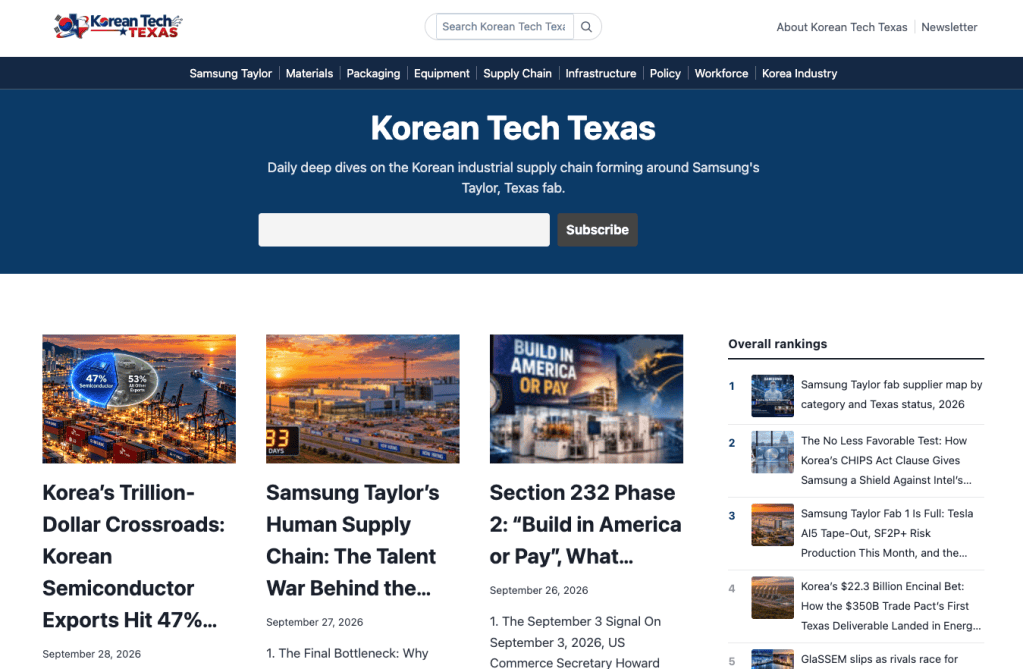
Samsung’s semiconductor project in Taylor is the central focus of a Texas publication connecting Korean-language business reporting with public records that help explain what the investment means for Williamson County.
Korean Tech Texas, an independent, English-language publication operated by Houston-based editor and publisher Yung Yi, follows Samsung and the Korean suppliers involved in semiconductor manufacturing. Its coverage includes equipment, chemicals, materials, packaging, power and logistics.
For Williamson County readers, the publication offers a way to follow developments that may first appear in Korean company filings, trade publications or earnings calls before reaching English-language audiences.
Yi pairs those sources with Texas records, examining documents such as incentive agreements, county tax abatements and permits to establish how corporate announcements translate into local projects.
“I read Korean, so I can follow Korean companies in their own filings and press,” Yi wrote on the publication’s About page. “And years inside Texas state government taught me where public records live and how to read them.”
Yi immigrated to the United States in 1991 and has lived in Texas for 35 years, according to his published biography. Beginning in 1997, he spent about eight years as a systems analyst for the state, working with public agency systems involving records, identity verification, taxes and insurance.
He started an independent web design business in 2005 and has operated it for 21 years.
That background informs his approach to covering Samsung’s Taylor project and the businesses that could become part of its supply chain. The publication examines which Korean suppliers are establishing Texas operations, distinguishing those projects from broader announcements or unverified reports.
Its Samsung coverage follows the Taylor facility’s construction, customers and preparations for production. Related reporting examines the materials, manufacturing equipment and packaging needed to support semiconductor production.
The publication also covers subjects with implications for Taylor and surrounding Williamson County communities, including electricity infrastructure, industrial sites, logistics, hiring and workforce training. Coverage of policy and incentives includes the CHIPS Act, tariffs and Texas economic development programs.
Yi’s approach brings together two sets of records that local readers might otherwise have to navigate separately: disclosures explaining a company’s plans in Korea and government documents showing the details of its proposed Texas operations.
According to its published editorial practices, Korean Tech Texas links figures such as project costs, job counts, dates and square footage to supporting sources. Those sources include company disclosures, Korea’s DART corporate filing system, government announcements, county records and established business publications.
The site says it identifies information that is reported but unconfirmed and notes when figures cannot be verified.
Yi also discloses using artificial intelligence tools to organize research and produce first drafts. He says he checks articles against their sources, edits them and approves them before publication.
Korean Tech Texas is independently owned and is not affiliated with the companies it covers, according to its website. It says it does not accept payment for coverage and that advertisers have no influence over its reporting. Its newsletter is free.
Yi also publishes Know USA, a Korean-language resource for immigrants navigating life in the United States, and ForKorean, a Korea-U.S. business directory.
For readers following Taylor’s semiconductor development, his English-language publication adds a Korean perspective to the Texas records documenting Samsung and its suppliers.
Korean Tech Texas is available at koreantechtexas.com.

